July Sale!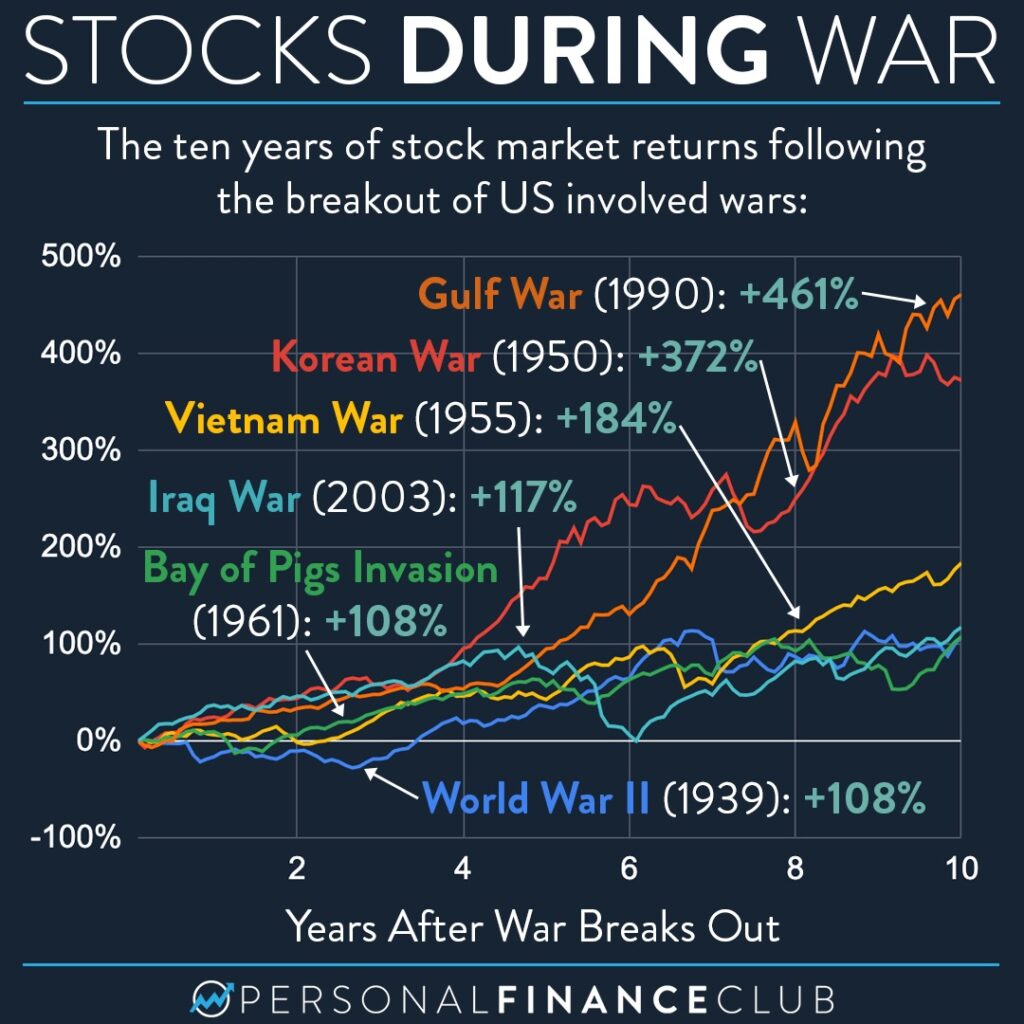
The US is involved in yet another war. I’ve sadly had to post about wars several times since I founded PFC in 2019 (Russia/Ukraine, Gaza/Israel, Venezuela, etc). Discussing the atrocities of war is beyond my area of expertise and it hurts my heart to think about all the lives impacted or destroyed. I don’t have an answer for any of it.
That said, I do have an answer when someone asks “How should I change my investments to prepare for an upcoming war”. History gives us a clear answer: Do nothing. Stay the course. Keep investing early and often.
Whether it’s war, tariffs, inflation, pandemics, or a massive frog plague, we simply can’t make clever moves to outsmart the market. Any sort of selling, reallocating, rebalancing, “buying the dip”, or any other purposeful change in strategy in reaction to world news is much more likely to hurt you than help you.
What happens the next 10 years won’t be the same as any of the previous wars in this example. That’s how life works. We don’t know what the future will hold. But if you use the past as any guide, the 10 years following the outbreak of US involved wars over the last century have resulted in good to great stock market returns. However, in five of the six wars in this chart, the market DID go down at some point. In the worst case, after World War II broke out, the market eventually dropped 28% from it’s beginning. Does that mean the market will drop this time? Nope. In the Iraq War, the market went straight up, never falling below the level it was at from the onset.
If the market drops 10%, will it keep dropping to 20%? Nobody knows! But we do know over long periods of time the market goes up. Conveniently, doing nothing is also the least stressful path. You don’t have to guess about when to get in and out and the risk of locking in even worse losses.
Hold your shares. Stick to your plan. Keep buying more as scheduled. Stay the course.
As always, reminding you to build wealth by following the two PFC rules: 1.) Live below your means and 2.) Invest early and often.
-Jeremy